NVIDIA RTX 6000 Pro Blackwell: Enterprise Workstation Analysis
Enterprise engineering teams and machine learning researchers face a recurring bottleneck when scaling local computational tasks: standard graphics hardware runs out of onboard memory long before mathematical pipelines finish execution. The NVIDIA RTX 6000 Pro Blackwell addresses this issue directly by supplying an expansive 96 GB GDDR7 frame buffer on a dedicated PCI-Express x16 bus.…
8 min read
How we write these. Every figure here — rating, price, stock and specification — is read from the Amazon product listing, not from hardware we tested ourselves. Ratings are the average left by buyers.
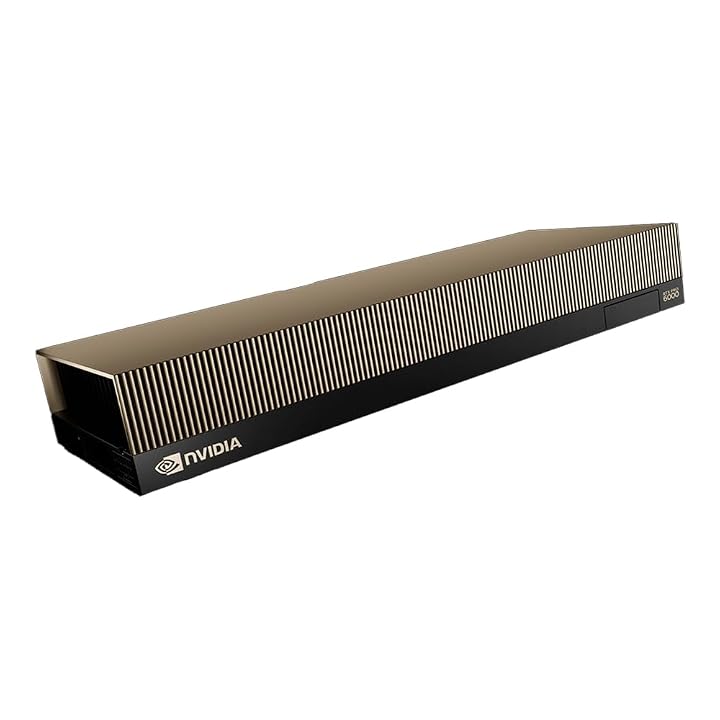


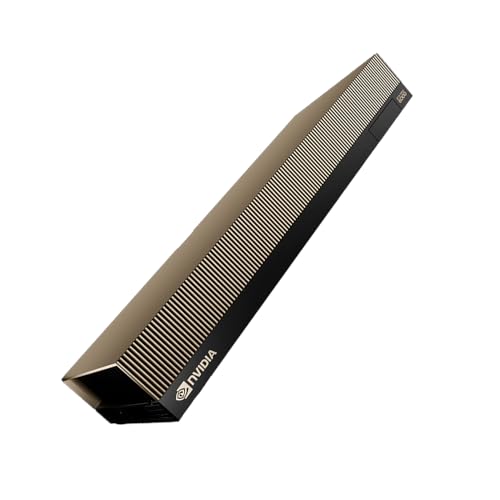
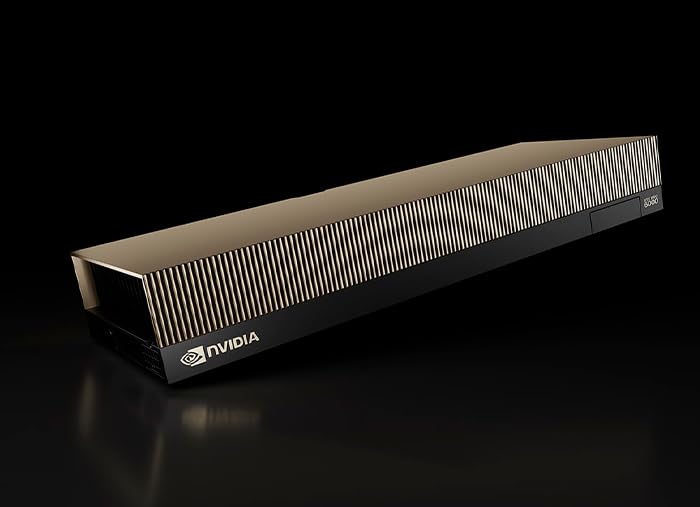
Product photos from the Amazon listing.
The product
NVIDIA RTX 6000 Pro Blackwell
Amazon buyer rating
4.0/5
Solid
The listing does not publish how many buyers rated it.
Price not listed
- Prime eligible
- Sold by Professional Graphics Solutions
Affiliate link. Price and stock come from the listing and change without notice.
As Amazon Associates, we earn from qualifying purchases. This means we may receive a small commission at no extra cost to you if you click through and make a purchase.
Enterprise engineering teams and machine learning researchers face a recurring bottleneck when scaling local computational tasks: standard graphics hardware runs out of onboard memory long before mathematical pipelines finish execution. The NVIDIA RTX 6000 Pro Blackwell addresses this issue directly by supplying an expansive 96 GB GDDR7 frame buffer on a dedicated PCI-Express x16 bus. Manufactured by PNY under model designation RTXPRO6000TC, this server edition graphics card is intended for rackmount chassis environments, heavy simulation routines, and complex artificial intelligence models where memory paging to host RAM causes unacceptable latency. If you are assessing whether this accelerator fits your company infrastructure, understanding its operational parameters, physical installation realities, and targeted design will clarify your purchase decision.
Integrating high-density server hardware into office facilities or localized data racks requires a calculated balance between compute power, hardware compatibility, and chassis environment. In this detailed analysis, we review the operational scope of the card, examine published technical figures, unpack deployment considerations for commercial workspaces, and identify the exact workflows that benefit most from this class of hardware.
What You Get With the NVIDIA RTX 6000 Pro Blackwell
The product package delivers an enterprise-grade computing accelerator built around high-density memory components and professional system validation. According to the manufacturer data, the item consists of a single dedicated server accelerator card built to slot into enterprise host architecture.
In the box
- Single PNY NVIDIA RTX PRO 6000 GPU Server Edition unit (Model: RTXPRO6000TC, UPC: 751492798271)
- 96 GB of GDDR7 graphics memory designed for high-throughput enterprise processing
- PCI-Express x16 physical and electrical bus interface
- PCI Express video output interface supporting 4K UHD (3840×2160) visual output
- Factory GPU clock speed rated at 1590 MHz
- Professional-tier component layout optimized for server system compatibility
- The listing does not specify bundled accessories, secondary adapters, or specialized auxiliary power conversion harnesses
Key Specifications
Evaluating the hardware profile of the card allows technical directors and infrastructure managers to confirm compatibility with their current server chassis and backplane configurations.
Specifications
- Product Name
- NVIDIA RTX PRO 6000 Blackwell Server Edition
- Model Number
- RTXPRO6000TC
- Brand / Manufacturer
- PNY / NVIDIA
- Graphics Coprocessor
- NVIDIA RTX 6000 Pro
- Graphics Card RAM
- 96 GB
- Graphics Memory Type
- GDDR7
All 12 specifications
- GPU Core Clock Speed
- 1590 MHz
- Memory Clock Speed
- 1.75 MHz
- Hardware Interface
- PCI-Express x16
- Display Maximum Resolution
- 4K UHD (3840×2160)
- Compatible Device Profile
- Server
- UPC
- 751492798271
Quoted from the product listing.
Hardware Architecture and Memory Footprint
The foundation of this enterprise accelerator rests on its substantial memory allocation. Analyzing the published rtx6000 pro blackwell specs reveals that the implementation of 96 GB of GDDR7 memory sets a formidable baseline for memory-intensive computations. Modern enterprise engineering relies on uninterrupted data processing; when working sets exceed the physical memory available on standard workstation graphics boards, systems are forced to page data through host memory channels, inducing severe computational latency. Having 96 GB residing directly on high-speed GDDR7 modules ensures that large mathematical graphs, volumetric models, and generative weights remain instantly accessible to the processing cores.
The presence of the rtx 6000 pro 96gb architecture changes how development teams handle batch processing. Rather than downsampling data sets or trimming context windows to accommodate smaller 24 GB or 48 GB frame buffers, data engineers can feed full-precision inputs directly into memory. The GDDR7 standard introduces enhanced bandwidth characteristics over previous memory generations, ensuring that the 1590 MHz GPU clock speed is steadily supplied with instructions and data vectors without starving the internal compute pipelines.
For research labs and local office computing clusters, this memory pool enables rapid iterative prototyping. Engineers can run complex structural analysis, fluid dynamics simulations, and continuous model parameter updates locally without waiting for cloud compute queue allocations. This hardware configuration shifts data retention entirely into on-premise hardware, providing predictable execution timelines for computational tasks.
Server Chassis and Workstation Integration Demands
Before deploying this accelerator, infrastructure teams must carefully evaluate the physical enclosure where the hardware will reside. The official listing designates the product specifically as an rtx 6000 pro blackwell server edition model with a compatible device rating restricted to server hardware. While traditional creative desktop towers rely on open mesh side panels and individual axial cooling fans, server edition accelerators are engineered to operate within rackmount chassis where controlled, directional forced-air cooling paths draw thermal energy front-to-back across the card.
Achieving successful rtx 6000 pro workstation integration therefore requires an enterprise-focused host platform. Installing a server-profile accelerator into a standard consumer tower or conventional desk pedestal can cause severe thermal throttling unless the chassis utilizes dedicated fan shrouds capable of generating high static pressure. The manufacturer listing notes the card uses a PCI-Express x16 interface, requiring a full-length, full-bandwidth physical slot with robust multi-phase motherboard power delivery. Because the listing does not specify precise external casing dimensions or specific power wattage requirements, IT administrators must verify chassis depth, internal cable clearances, and auxiliary power rail capacities before mounting.
Organizations standardizing their infrastructure on the pro 6000 blackwell framework typically deploy these accelerators in centralized server closets, sound-isolated utility rooms, or enterprise 2U to 4U rack enclosures. This separation eliminates fan acoustics from active team workspaces while providing the consistent ambient temperatures and electrical conditioning necessary for continuous high-load operations.
Machine Learning and Enterprise Compute Capacity
Enterprise data science teams frequently evaluate the rtx6000 pro blackwell for machine learning workloads due to the severe memory demands of contemporary neural network training. In modern natural language processing and multimodal vision architectures, model parameter scales routinely exceed the limits of single standard graphics adapters. The dense 96 GB GDDR7 allocation allows teams to host significant parameter counts locally, enabling private fine-tuning routines, distributed parameter-efficient adjustments, and massive context window inferences without transmitting proprietary data to external multi-tenant cloud platforms.
When assessing rtx pro 6000 compute performance, the core GPU frequency of 1590 MHz combined with dedicated server drivers delivers stable, non-throttled execution over days of uninterrupted processing. In production machine learning cycles, stability takes precedence over temporary clock boosts; commercial server software stacks require predictable compute timelines so data pipelines feeding automated business systems maintain strict latency targets. Integrating high-throughput enterprise cards into private training nodes mitigates recurring third-party cloud hosting costs while retaining complete organizational control over sensitive data assets.
The technical structure highlighted in this nvidia rtx pro 6000 blackwell evaluation demonstrates that on-premise AI deployments benefit greatly from uniform hardware clusters. By deploying identical server-edition boards across rack slots, data engineering teams can orchestrate containerized workloads via orchestration platforms, allocating portions of the 96 GB frame buffer across distinct enterprise teams or concentrating the entire resource pool on large-scale model checkpoints.
Display Capabilities and Daily Office Suitability
While compute performance forms the primary appeal of this hardware, visual output specifications remain an important operational consideration. According to the product specifications, the accelerator features a PCI Express video output interface capable of a maximum display resolution of 4K UHD (3840×2160). For technical operators who need to interface directly with host servers or workstations during maintenance, diagnosis, or local visualization tasks, this high-resolution support guarantees crisp rendering on contemporary ultra-high-definition monitors.
However, prospective buyers reviewing this PNY rtx 6000 pro blackwell review must distinguish between dedicated visualization hardware and enterprise compute accelerators. Unlike consumer graphics cards that emphasize multiple display outputs for sprawling multi-screen desktop arrays, server-oriented cards focus their physical backplates on chassis airflow and structural mounting rigidity. The inclusion of a 4K UHD output interface ensures that high-fidelity scientific visualizations, photogrammetry models, and engineering simulations can be reviewed locally on ultra-high-definition monitors when required.
For daily enterprise workflows, this card is best deployed as a headless or secondary compute engine while standard desktop displays operate off dedicated display adapters, or as a centralized compute resource accessed remotely by engineers from their office laptops and desks. This setup allows engineering personnel to tap into the 96 GB memory pool for heavy compute jobs while maintaining a quiet, cool, and clutter-free individual workspace.
NVIDIA RTX 6000 Pro Blackwell Pros and Cons
Reasons to buy
- Expansive 96 GB GDDR7 memory buffer
- High-throughput PCI-Express x16 bus interface
- 4K UHD maximum resolution support
- Stable 1590 MHz GPU clock speed
- Engineered specifically for server infrastructure
Reasons to avoid
- Compatible with server chassis environments only
- Requires high-airflow rackmount cooling configurations
- Listing does not specify physical dimensions
Check NVIDIA RTX 6000 Pro Blackwell on Amazon
Is the NVIDIA RTX 6000 Pro Blackwell Worth It
Determining whether the investment aligns with your enterprise goals depends entirely on the nature of your computational workflows and your physical hosting facilities. For data science departments, machine learning research units, and engineering firms managing complex computational fluid dynamics, large-scale simulations, or private neural network training, the hardware delivers exceptional utility. The inclusion of 96 GB of GDDR7 memory within a single PCI-Express x16 physical slot solves memory-exhaustion crashes that disrupt iterative enterprise development, making the hardware an indispensable operational asset for teams that have outgrown 24 GB and 48 GB accelerators.
Conversely, for creative studios, video editing suites, and general office productivity environments where workloads consist primarily of real-time timeline scrubbing, multi-monitor productivity panels, and standard office applications, deploying this server-edition hardware is unnecessary. Without workloads specifically architected to leverage massive GDDR7 memory capacities, and without server-grade cooling infrastructure, general commercial offices will not realize the operational advantages of this card.
Ultimately, is rtx6000 pro blackwell worth it for enterprise computing? For organizations with dedicated server rack space, trained system administrators, and demanding mathematical or artificial intelligence workloads, the card represents an authoritative, highly capable computational investment that ensures long-term deployment viability.
FAQ
What is the total memory capacity of the NVIDIA RTX 6000 Pro Blackwell?
The card comes equipped with 96 GB of high-speed GDDR7 memory, providing a substantial frame buffer designed specifically to run large machine learning models, complex engineering simulations, and data-dense enterprise workloads without overflowing to system memory.
What display resolution does this card support?
The card features a PCI Express video output interface supporting a maximum display resolution of 4K UHD (3840×2160), allowing system administrators and researchers to output ultra-high-definition visuals directly to compatible monitors.
Who manufactures this specific RTX 6000 Pro model?
The hardware is manufactured by PNY featuring NVIDIA processing architecture under the specific model name RTXPRO6000TC and universal product code 751492798271.
What is the base GPU clock speed of this accelerator?
The listing specifies a GPU clock speed of 1590 megahertz (MHz), providing consistent and stable processing throughput across heavy computational and scientific workloads.
Where these numbers come from
- 192reviews published
- 1,398products with a buyer rating
- 1,374products with listed features
- 84brands covered
Ratings, prices, stock and specifications are read from the Amazon product listing. We do not run lab tests of our own, so a score on this site is the average rating left by buyers, not a verdict from a test bench. Prices change without notice — check the listing before buying.


