PNY NVIDIA RTX Pro 6000 Blackwell Workstation Evaluation
Enterprise computing environments and professional studios demand hardware capable of crunching complex simulations, massive neural network datasets, and high-fidelity 3D assets without encountering out-of-memory errors. The NVIDIA RTX Pro 6000 Blackwell represents the pinnacle of workstation acceleration, delivering a substantial generational shift in both frame buffer capacity and compute architecture. Tailored specifically for machine learning…
8 min read
How we write these. Every figure here — rating, price, stock and specification — is read from the Amazon product listing, not from hardware we tested ourselves. Ratings are the average left by buyers.


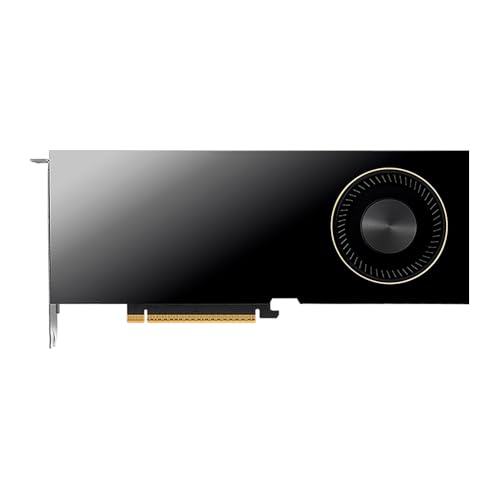
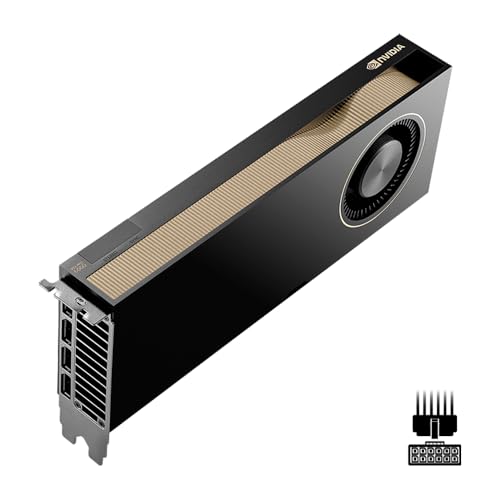
Product photos from the Amazon listing.
The product
NVIDIA RTX Pro 6000 Blackwell
Amazon buyer rating
5.0/5
Exceptional
The listing does not publish how many buyers rated it.
Price not listed
- Prime eligible
Affiliate link. Price and stock come from the listing and change without notice.
As Amazon Associates, we earn from qualifying purchases. This means we may receive a small commission at no extra cost to you if you click through and make a purchase.
Enterprise computing environments and professional studios demand hardware capable of crunching complex simulations, massive neural network datasets, and high-fidelity 3D assets without encountering out-of-memory errors. The NVIDIA RTX Pro 6000 Blackwell represents the pinnacle of workstation acceleration, delivering a substantial generational shift in both frame buffer capacity and compute architecture. Tailored specifically for machine learning practitioners, visual effects artists, and compute-heavy engineering workflows, this flagship card introduces an extraordinary 96GB GDDR7 configuration built to handle continuous professional workloads. Evaluating whether this card represents the right investment for your studio requires looking beyond raw computational benchmarks to understand how its cooling configuration, substantial form factor, and daily stability influence workstation integration.
Integrating a high-tier desktop workstation GPU into a dedicated home office or enterprise design suite involves distinct hardware considerations. Across this review, we examine the practical realities of deploying the card, analyzing clearance within standard enclosures, daily acoustic footprints, power infrastructure requirements, and productivity scaling. We also cross-examine architecture considerations highlighted in our pro 6000 blackwell performance notes to establish where this GPU shines and where physical or spatial limitations might arise.
What You Get With the NVIDIA RTX Pro 6000 Blackwell
Manufactured by PNY, the package provides the enterprise hardware components required to integrate high-capacity Blackwell computing directly into compatible desktop systems.
In the box
- PNY NVIDIA RTX PRO 6000 Blackwell MAX-Q Workstation Edition graphics card
- Dedicated dual fan thermal management assembly
- 96GB GDDR7 frame buffer hardware architecture
- Manufacturer model identification number VCNRTXPRO6000BQ-PB
- Note on accessories: the listing does not specify whether auxiliary power harnesses, PCIe brackets, or display adapters are included in the retail packaging
Key Specifications
Specifications
- Card Model
- NVIDIA RTX Pro 6000 Blackwell
- Manufacturer
- PNY
- Part Model Number
- VCNRTXPRO6000BQ-PB
- Memory Capacity
- 96GB
- Memory Architecture
- GDDR7
- Cooling Design
- Dual Fan Active Cooler
All 9 specifications
- Product Dimensions
- 3.1 x 14.2 x 0.1 inches (as listed)
- Item Weight
- 3.34 pounds
- Workstation Design Profile
- Max-Q Workstation Edition
Quoted from the product listing.
Workstation Chassis Integration and Physical Dimensions
Physical spatial requirements represent one of the primary hurdles when integrating high-end workstation hardware into an existing office layout. The PNY NVIDIA RTX Pro 6000 Blackwell features an extensive card length of 14.2 inches alongside a substantial mass of 3.34 pounds. These physical attributes immediately eliminate compact mini-ITX cases and many standard mid-tower computer chassis from consideration. System builders must verify clearance between the PCIe slot brackets and the front-mounted intake fans, front radiator assemblies, or internal drive cages before attempting installation.
Structural stability is equally critical for a card weighing over three pounds. Over time, horizontal motherboard mounting configurations without supplementary reinforcement can place undue stress on the primary PCIe x16 slot, potentially resulting in PCB deflection or unstable motherboard trace connections. Utilizing a heavy-duty chassis retention bracket or dedicated GPU support pillar is highly recommended to protect both the motherboard interface and the graphics card during routine desk movement. Similar structural demands were observed when analyzing the overall hardware footprint in our rtx6000 pro blackwell implementation assessments.
Cable pathway clearance must also be calculated within your chassis layout. Given the generous 14.2-inch length, auxiliary power cables routed from the power supply must have ample turning radius within the enclosure so the chassis side panel closes without applying direct lateral pressure to the connectors. Proper spacing around the intake area ensures uninterrupted airflow, preventing heat retention pockets inside workstation compartments that house additional storage arrays or multi-channel memory modules.
Thermal Management and Acoustic Footprint in Shared Workspaces
Unlike enterprise server racks isolated in dedicated server closets with high-decibel forced-air cooling, professional desktop workstations frequently sit directly beside or beneath desks in shared offices and home studios. The RTX Pro 6000 Blackwell dual fan thermal assembly is configured to balance high heat dissipation with civilized noise production. Active dual fan solutions typically disperse air within the chassis rather than forcing it entirely out of the rear I/O bracket, making comprehensive case exhaust ventilation essential for long rendering sessions.
During low-intensity tasks, such as coding, user interface wireframing, or basic document editing, the dual fan profile maintains a subtle, low-frequency hum that easily blends into typical background room acoustics. Because thermal demands remain modest during standard desktop productivity, fan speeds stay restrained. This acoustic composure allows professionals working in sound-sensitive settings, including post-production audio mastering and video editing suites, to operate comfortably without distracting background fan whine.
When executing sustained compute runs—such as compiling complex scenes in Unreal Engine or executing iterative generative artificial intelligence training batches—the thermal system spools up to dissipate thermal energy generated across the compute dies and GDDR7 modules. The listing designates this card as a Max-Q Workstation Edition, indicating optimized thermal tuning to maintain thermal equilibrium without excessive acoustic spikes. However, maintaining adequate ambient room temperature and unobstructed case airflow remains mandatory to ensure internal fans do not throttle performance during multi-hour render queues.
Massive 96GB GDDR7 VRAM and Productivity Performance
The standout hardware attribute of the card is unquestionably its massive 96GB GDDR7 frame buffer. For data scientists, computer vision engineers, and digital artists, memory exhaustion is the most frequent cause of application instability and pipeline slowdowns. Having 96GB of dedicated onboard memory allows professionals to load massive language model weights, dense point clouds, or multi-gigabyte simulation matrices entirely into high-speed VRAM, bypassing the latency bottlenecks associated with swapping data over system RAM interfaces.
In high-end 3D animation and digital cinematography environments, productivity is directly tied to unhindered visual feedback. In creative software suites like Autodesk Maya, SideFX Houdini, and DaVinci Resolve, working with uncompressed 8K RAW video pipelines or complex volumetric particle simulations demands substantial memory overhead. The RTX Pro 6000 Blackwell 96GB GDDR7 subsystem delivers exceptional bandwidth, allowing real-time viewport manipulation and immediate playback caching that drastically accelerates daily project delivery timelines, as discussed in our dedicated rtx 6000 pro 96gb workflow breakdown.
While high-performance mobile computing solutions, such as the dell pro max 18 plus laptop, offer respectable on-the-go computing power, desktop workstation class hardware with a dedicated 96GB frame buffer occupies a different performance category entirely. Desktop architecture avoids the aggressive thermal throttling and power cap limitations inherent to mobile enclosures, ensuring that complex rendering passes run consistently overnight without performance degradation or memory boundary limits interrupting unattended jobs.
Power Delivery and Office Setup Compatibility
Deploying a flagship graphics solution necessitates a thorough review of your workstation’s underlying power infrastructure. High-density compute silicon and fast GDDR7 memory modules demand clean, stable power delivery under heavy transient compute spikes. While the listing does not specify the exact total graphics power rating or connector pin configuration, flagship enterprise hardware of this caliber routinely demands high-capacity power supplies featuring dedicated PCIe power rails to prevent random shutdowns under peak compute loading.
Workstation builders must ensure that the host computer’s power supply unit provides ample wattage headroom beyond the baseline compute draw to support multi-core workstation processors, numerous NVMe solid-state drives, and high-RPM system cooling arrays simultaneously. Incorporating a high-grade uninterruptible power supply (UPS) into your desk setup is also strongly advised. A UPS shields the workstation from utility voltage drops and provides sufficient runtime to safely save progress or checkpoint training runs if local power interruptions occur during long rendering sessions.
Thermal emission into the surrounding room is another practical factor in everyday office integration. Because thermodynamics dictate that all electrical wattage consumed by the computer ultimately exhausts into the workspace as heat, prolonged high-load operations will warm compact home offices or studios without adequate ventilation. Ensuring proper room air circulation or localized air conditioning will keep both the workstation operator and the computing hardware functioning comfortably throughout demanding production sprints.
NVIDIA RTX Pro 6000 Blackwell Pros and Cons
Reasons to buy
- Massive 96GB GDDR7 high-speed memory frame buffer
- Dual fan active cooling maintains thermal stability
- Advanced Blackwell architecture for enterprise workstation workloads
- Max-Q workstation profile tuned for balanced acoustic output
Reasons to avoid
- Lengthy 14.2-inch dimension demands large chassis clearance
- Weight of 3.34 pounds requires GPU support bracket
- Listing does not specify bundled power adapter accessories
Check NVIDIA RTX Pro 6000 Blackwell on Amazon
Is the NVIDIA RTX Pro 6000 Blackwell Worth It
The NVIDIA RTX Pro 6000 Blackwell for workstation deployments represents a targeted, professional investment designed to solve specific operational bottlenecks. For enterprise research laboratories, machine learning deployment teams, and premium visual effects studios, the 96GB GDDR7 memory pool and Blackwell compute architecture provide massive utility. By eliminating out-of-memory errors and drastically shortening model iteration cycles, the hardware can easily justify its inclusion in mission-critical commercial workflows where downtime and render delays directly erode project profitability.
Conversely, for casual content creators, general office workers, or digital artists working primarily with standard 4K timelines and low-polygon 3D models, this level of hardware scale is excessive. Traditional creative software stacks handling lighter workloads cannot fully saturate 96GB of memory, meaning standard desktop graphics cards or midrange workstation solutions offer more than enough capability without demanding specialized chassis dimensions or extensive thermal planning.
Ultimately, the PNY NVIDIA RTX Pro 6000 Blackwell excels as an uncompromising production workhorse. If your daily business operations revolve around massive dataset manipulation, enterprise-tier digital content creation, or local artificial intelligence development that constantly surpasses traditional memory boundaries, this GPU provides the stability, memory bandwidth, and sustained performance necessary to power an elite modern workstation.
FAQ
What power supply wattage is recommended for this card?
The listing does not specify the exact total graphics power or recommended system power supply wattage for this model. However, enterprise-grade workstation systems utilizing high-end compute GPUs typically require power supplies rated between 850W and 1200W, depending on the CPU configuration and auxiliary hardware installed in the workstation.
How much memory is integrated into the PNY NVIDIA RTX Pro 6000 Blackwell?
The card features a massive 96GB GDDR7 memory frame buffer, providing substantial bandwidth and capacity tailored for memory-intensive enterprise simulations, local artificial intelligence modeling, and complex 3D visual effects workflows.
What cooling configuration does this workstation graphics card utilize?
This workstation edition utilizes a dual fan active cooling configuration designed to exhaust heat from the internal components into the workstation chassis, requiring good overall case ventilation to maintain optimal operating temperatures.
Will the card fit into a standard compact or mid-tower case?
With an extensive listed length of 14.2 inches, this card generally will not fit inside compact micro-ATX or small form factor enclosures. Prospective buyers must measure the interior clearance of their computer chassis, taking into account front intake fans and radiator assemblies, to ensure physical compatibility.
What display connectivity ports are provided on the rear panel?
The product listing does not specify the exact number or version of display ports, HDMI connections, or alternative video outputs present on the rear I/O bracket of this workstation model.
Where these numbers come from
- 192reviews published
- 1,398products with a buyer rating
- 1,374products with listed features
- 84brands covered
Ratings, prices, stock and specifications are read from the Amazon product listing. We do not run lab tests of our own, so a score on this site is the average rating left by buyers, not a verdict from a test bench. Prices change without notice — check the listing before buying.


