StarScope Monocular G3: A Compact Viewfinder for Home and Travel
If you spend hours working near a window or relaxing on a patio, having an immediate way to inspect distant activity turns casual observation into an effortless daily habit. The StarScope Monocular G3 is engineered for observers who want a quick, grab-and-go optical tube without the bulk or alignment hassle of traditional binoculars. Built with…
9 min read
How we write these. Every price, stock status and specification here is read from the Amazon product listing, not from hardware we tested ourselves. Scores are out of 10, based on listed specifications and buyer feedback.


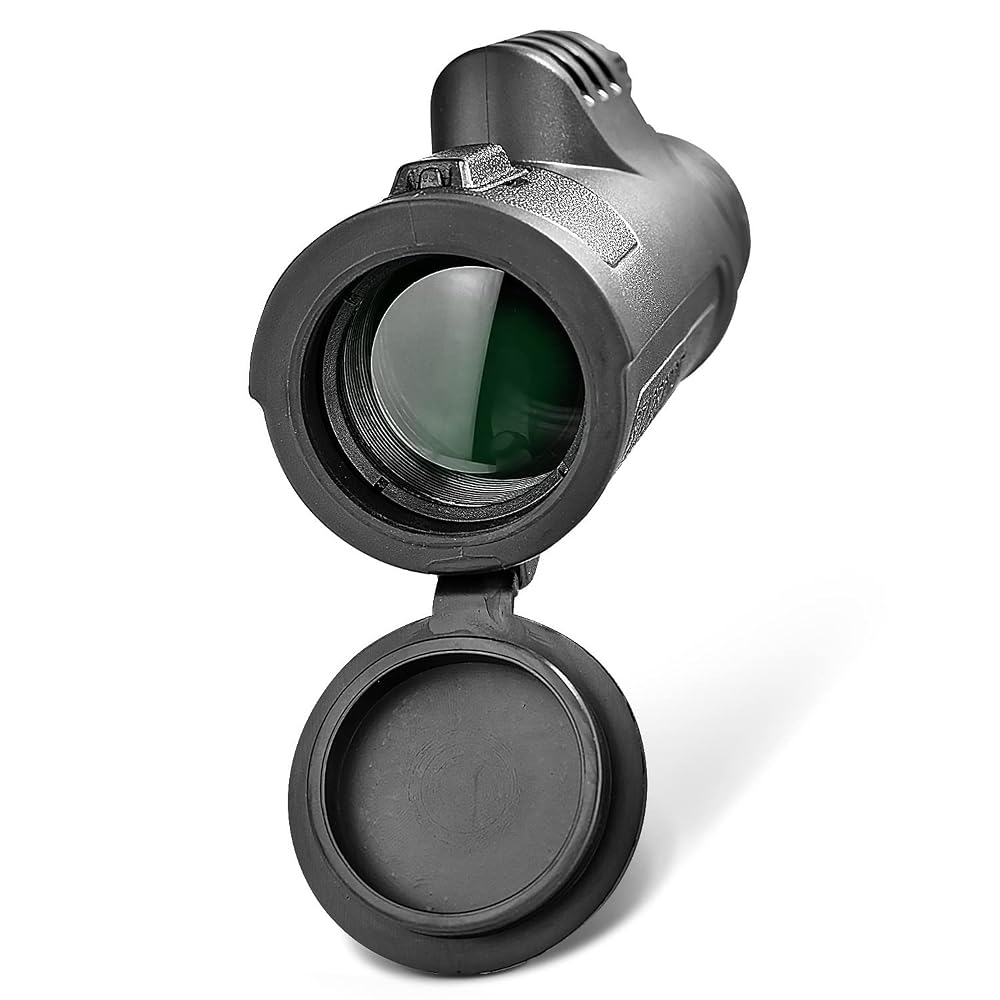


Product photos from the Amazon listing.
The product
StarScope Monocular G3
Our score
7.6/10
Mixed
Price not listed
- Sold by SavvySmartDeals, shipped by Amazon
Affiliate link. Price and stock come from the listing and change without notice.
As Amazon Associates, we earn from qualifying purchases. This means we may receive a small commission at no extra cost to you if you click through and make a purchase.
If you spend hours working near a window or relaxing on a patio, having an immediate way to inspect distant activity turns casual observation into an effortless daily habit. The StarScope Monocular G3 is engineered for observers who want a quick, grab-and-go optical tube without the bulk or alignment hassle of traditional binoculars. Built with a 10x magnification ratio and a 42mm objective lens, this handheld viewer brings backyard birds, tree canopies, and neighborhood landmarks into view while remaining small enough to sit beside a keyboard or notebook. Deciding whether the starscope monocular fits your personal space comes down to evaluating its balance of lightweight portability, streamlined optics, and fixed optical configuration.
Rather than requiring continuous adjustment through multiple moving dials, this model focuses on instant accessibility for routine outdoor check-ins and travel excursions. In this starscope monocular g3 review, we examine its structural build quality, the role of its BAK4 prism glass, everyday optical clarity, and practical mounting realities. We also explore how easily it slides into an everyday workspace routine, how its smartphone compatibility operates in practice, and whether its fixed-focus architecture matches your viewing expectations.
What You Get With the StarScope Monocular G3
The product packaging keeps things straightforward, supplying the essential optical hardware needed for quick deployment straight out of the box without complicated assembly.
In the box
- One StarScope Monocular G3 handheld telescope optical body.
- One tethered front objective lens cap designed to prevent accidental loss during field use.
- One removable rear ocular eyepiece cap that shields the glass from dust and scratches during storage.
- Fully multi-coated (FMC) optical glass elements designed to optimize light transmission.
- Internal BAK4 roof prism assembly housed within an impact-resistant composite chassis.
- Straight-through finderscope orientation for quick, intuitive target tracking.
- Integrated fixed mounting platform designed for basic support positioning.
- Smartphone compatibility enabling quick digiscoping photography when paired with external phone mounts.
Key Specifications
Specifications
- Brand
- STARSCOPE
- Model Name
- G3
- Magnification Ratio
- 10x
- Objective Lens Diameter
- 42 mm
- Prism Type
- BAK4 Prism
- Lens Coating
- Fully Multi-Coated (FMC)
All 12 specifications
- Field of View
- 305 ft at 1,000 yds
- Exit Pupil Diameter
- 4.2 mm
- Focal Length
- 63 mm
- Item Dimensions
- 6.5 in D x 2.3 in W x 3.0 in H
- Item Weight
- 250 g
- Focus Type
- Fixed Focus
Quoted from the product listing.
Optical Clarity and Prism Performance
The core optical capabilities of the starscope 10×42 monocular depend heavily on its internal lens and prism construction. Featuring a 42mm objective lens paired with 10x magnification, this optical barrel collects a generous amount of ambient daylight. A 42mm aperture gathers considerably more light than compact 25mm pocket monoculars, producing brighter images when scanning tree lines or garden borders on overcast afternoons. The optical pathway yields an exit pupil diameter of 4.2 millimeters, which matches the natural dilation of human pupils during standard daytime and early twilight conditions. This makes acquiring a full circular image intuitive, reducing the dark vignetting often seen in narrower barrels.
Visual fidelity also depends on glass density, and the starscope bak4 prism represents a noticeable step up over lower-grade BK7 glass. BAK4 barium crown glass features superior refractive properties that minimize internal light scattering, producing sharper edge-to-edge definition and a perfectly round exit pupil. Combined with fully multi-coated (FMC) optical surfaces, the glass cuts glare and prevents reflective losses across internal surfaces. Unlike sensor-driven digital scopes such as the minolta 10×25 digital night vision monocular that rely on electronic displays and battery power, this purely analog optic provides instantaneous visual feedback without display lag, digital noise, or recharging routines.
Understanding the fixed focus system is essential for establishing realistic expectations. With a factory focal length specified at 63 millimeters, the device is preset to maintain acceptable image sharpness across mid-range and distant horizons without requiring you to turn a central wheel. Across its wide field of view of 305 feet at 1,000 yards, distant landscape features remain clear. However, because there is no manual fine-tuning ring, macro observation of insects or garden flowers closer than several yards will lack pin-sharp precision. For medium-distance scanning across yards and parks, this fixed setup allows you to raise the scope to your eye and inspect distant movement instantly.
Balcony and Home Workspace Utility
Integrating an optic into a home office environment requires hardware that delivers quick utility without creating desk clutter. As a compact monocular for home window viewing, the StarScope Monocular G3 excels because of its minimal footprint. Measuring 6.5 inches long by 2.3 inches wide and 3.0 inches high, it rests comfortably beside a monitor arm, pencil cup, or windowsill without occupying meaningful desk area. Full-sized binoculars demand dedicated storage and often get tucked inside drawers, which discourages quick wildlife spotting. Having an ultra-compact single-barrel viewer within arm reach means you can take thirty-second visual breaks between tasks to inspect outdoor movement with zero friction.
For patio observers and suburban desk workers, the starscope monocular for bird watching provides an immediate connection to the surrounding outdoor environment. When birds land on fence posts, gutters, or birdfeeders, setting up large spotting scopes often causes sudden movements that startle wildlife away before you can align your view. The quiet, compact profile of this monocular allows you to track finches, cardinals, or visiting raptors through a window pane with minimal motion. Its 305-foot field of view provides ample scanning breadth to locate moving birds among dense foliage without constantly repositioning your head.
Workplace ergonomics also benefit from having an optic that requires no technical maintenance. Taking brief visual breaks to view distant greenery helps relax eye muscles that stay contracted during extended periods of close-up computer work. Because this optic relies entirely on manual operation with no power switches, Bluetooth pairing steps, or batteries to monitor, it fits seamlessly into a calm, organized work routine. It stays permanently ready for use on your desk, giving you an immediate window into the outdoors whenever you need a mental pause.
Portability and Daily Handling
Portability is the primary reason many outdoor enthusiasts prefer a monocular over bulkier binocular frames. Weighing approximately 250 grams, the StarScope Monocular G3 serves as an effortless starscope monocular everyday carry accessory that drops into jacket pockets, shoulder bags, or vehicle center consoles without adding noticeable bulk. When embarking on an afternoon park walk, neighborhood trail, or weekend sporting event, heavy optical gear often stays behind due to weight fatigue. The lightweight housing ensures you can bring optical magnification anywhere without feeling weighed down.
Field durability and lens protection are well considered in the physical layout. The integrated front objective lens cap stays tethered directly to the main barrel casing, completely eliminating the frustration of misplacing lens caps in tall grass or crowded bleachers. The separate rear ocular cap fits securely over the eyepiece, shielding the multi-coated glass against pocket lint, dust, and keys during transit. While specialized gear like the atn blazeseeker 6 provides heavy illumination for tactical and search purposes, the StarScope Monocular G3 focuses squarely on clean daylight protection and straightforward mechanical durability for everyday recreational outings.
Handling stability at 10x magnification requires thoughtful hand positioning. Holding any high-power optic steady with one hand can introduce subtle tremors if your grip remains tense or unsupported. The textured exterior casing provides secure contact points for your fingers, allowing you to brace your elbow against your torso to form an effective three-point stabilization technique. While dedicated accessories like the meta quest elite strap utilize counterbalancing harnesses to secure optics comfortably to the head, handheld viewing depends on steady posture. When viewing from a desk or balcony, resting the barrel directly on a window sill or deck railing produces exceptionally steady images.
Smartphone Compatibility and Digital Capture
The manufacturer highlights starscope monocular smartphone compatibility, appealing to casual observers who want to document their sightings without purchasing expensive telephoto camera lenses. By aligning a smartphone camera lens with the monocular ocular eyepiece, you turn your mobile screen into a shared viewing display and capture photos or video of distant subjects. This basic digiscoping technique makes it easy to photograph visiting backyard birds or architectural details across the street to save in personal nature logs or share with friends.
Achieving clean photos through handheld smartphone positioning requires patience and a steady hand. Because this monocular features a straight-through finderscope layout and a 4.2mm exit pupil, your phone camera lens must sit precisely over the optical center to avoid dark vignetting around the image frame. Using a third-party smartphone mounting clamp ensures steady physical contact, preventing the handheld slippage that occurs when holding both devices manually. Once positioned, your mobile camera digital zoom can crop out the circular edge borders, producing clear daylight images of wildlife from the comfort of your desk.
StarScope Monocular G3 Pros and Cons
Reasons to buy
- Lightweight 250-gram handheld chassis
- High-density BAK4 prism glass
- Generous 42mm objective lens
- Fully multi-coated optics for glare reduction
- Integrated front and rear protective lens caps
Reasons to avoid
- Fixed focus limits close-up macro viewing
- Fixed mount offers basic positioning support
- Requires steady hand bracing at 10x magnification
Check StarScope Monocular G3 on Amazon
Is the StarScope Monocular G3 Worth It
Determining whether the StarScope Monocular G3 is worth your investment depends on how you plan to use it within your daily routine. If you need an unobtrusive, lightweight viewer to keep beside your computer, on a patio table, or inside a daypack, this model provides excellent practical utility. The combination of a genuine BAK4 prism, a generous 42mm multi-coated objective lens, and an integrated objective cap offers satisfying daylight clarity for casual observers who prioritize convenience and speed over elaborate optical adjustments.
On the other hand, dedicated ornithologists or field researchers who require granular focus wheels to resolve feather textures at varying close distances will find the fixed-focus system restrictive. Because the optical assembly is calibrated for mid-to-long-range viewing, it cannot resolve tiny close-up subjects within a few feet of the glass. Observers who regularly need to rack focus between nearby tree branches and distant horizons may prefer an optic with an adjustable central focus ring. However, for buyers who want zero-maintenance viewing, the fixed setup ensures you never miss a fleeting moment fiddling with focus dials.
Ultimately, for home office professionals taking visual screen breaks, casual suburban nature watchers, and travelers wanting compact magnification, this monocular delivers solid performance. It balances generous light intake through its 42mm aperture with an ultra-light 250-gram chassis that never clutters your workspace. If you want a dependable, grab-and-go viewing tool that stays ready whenever interesting activity appears outside your window, the StarScope Monocular G3 is well worth considering.
FAQ
What are the key StarScope Monocular G3 specs?
The starscope monocular specs include a 10x magnification ratio, a 42mm objective lens diameter, a 63mm focal length, and a 4.2mm exit pupil diameter. It features a BAK4 roof prism, fully multi-coated (FMC) lenses, a 305-foot field of view at 1,000 yards, a fixed focus system, and weighs 250 grams with dimensions of 6.5 by 2.3 by 3.0 inches.
Does the StarScope Monocular G3 have an adjustable focus ring?
The listing states that this model features a fixed focus optical system rather than a manual focus ring. This configuration keeps mid-range and distant subjects in acceptable focus automatically, allowing you to raise the monocular to your eye and observe immediately without manually adjusting a dial.
Can the StarScope Monocular G3 be used for bird watching?
Yes, the 10x magnification brings distant birds into view, while the 42mm objective lens gathers ample daylight to reveal plumage colors and outlines. Its wide 305-foot field of view at 1,000 yards allows you to easily track birds across tree canopies, lawn areas, and backyard feeders.
How does the StarScope Monocular G3 connect to a smartphone?
The monocular is listed as smartphone compatible, meaning its eyepiece aligns with mobile camera lenses for digiscoping. To capture stable photos and avoid dark borders, pairing the monocular with an external smartphone adapter clamp is recommended to keep the phone camera aligned with the optical center.
What accessories come included in the StarScope Monocular G3 package?
The package includes one handheld StarScope Monocular G3 telescope with an integrated front lens cap tethered to the body, along with a removable rear ocular lens cap to protect the eyepiece from dust and surface scratches during storage and travel.
Can the StarScope Monocular G3 be used in low-light or night conditions?
The StarScope Monocular G3 is a manual, passive optical device that relies on available ambient light. Its 42mm objective lens and BAK4 prism provide good brightness during daytime and twilight, but it does not contain electronic night vision sensors or infrared illuminators for viewing in complete darkness.
Where these numbers come from
- 581reviews published
- 1,398products with a score
- 1,374products with listed features
- 84brands covered
Ratings, prices, stock and specifications are read from the Amazon product listing. We do not run lab tests of our own, so scores on this site are out of 10, based on listed specifications and buyer feedback, not a verdict from a test bench. Prices change without notice — check the listing before buying.


