Seagate Exos X18 18TB Review: Enterprise Storage for Home & Office Workstations
Finding the right high-capacity storage solution often forces workstation users and homelab builders to weigh enterprise performance against everyday desktop practicalities. The Seagate Exos X18 18TB enterprise hard drive (model ST18000NM005J) is built specifically for data-intensive storage architectures, hyperscale environments, and demanding 24/7 continuous operations. With its 18 TB digital storage capacity, 7200 RPM rotational…
8 min read
How we write these. Every figure here — rating, price, stock and specification — is read from the Amazon product listing, not from hardware we tested ourselves. Ratings are the average left by buyers.


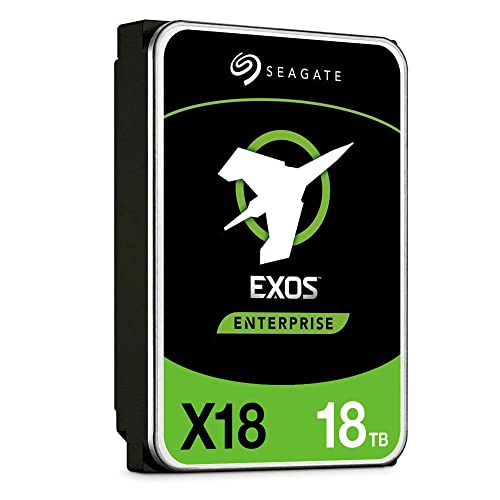
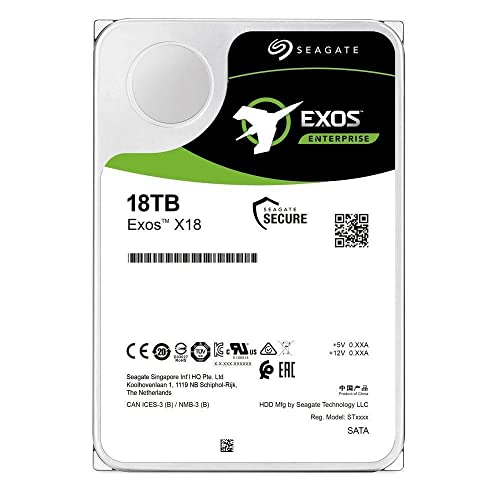
Product photos from the Amazon listing.
The product
Seagate Exos X18 18TB
Amazon buyer rating
4.8/5
Exceptional
The listing does not publish how many buyers rated it.
Price not listed
- Sold by Brute Networks Corporation
Affiliate link. Price and stock come from the listing and change without notice.
As Amazon Associates, we earn from qualifying purchases. This means we may receive a small commission at no extra cost to you if you click through and make a purchase.
Finding the right high-capacity storage solution often forces workstation users and homelab builders to weigh enterprise performance against everyday desktop practicalities. The Seagate Exos X18 18TB enterprise hard drive (model ST18000NM005J) is built specifically for data-intensive storage architectures, hyperscale environments, and demanding 24/7 continuous operations. With its 18 TB digital storage capacity, 7200 RPM rotational speed, and enterprise-grade 12Gb/s SAS interface, it delivers severe throughput and storage density. However, because this specific edition relies on SAS connectivity rather than everyday SATA, it is tailored for setups equipped with dedicated host bus adapters, enterprise backplanes, or specialized server enclosures rather than standard plug-and-play desktop motherboards.
This comprehensive review examines how the Seagate Exos X18 18TB behaves when deployed inside small-office file servers, custom homelabs, and workstation storage arrays. We assess the physical architecture, real-world SAS interface compatibility requirements, acoustic profile, thermal management, and overall endurance. By breaking down the essential technical specifications and operational compromises, this guide provides the clarity needed to determine whether this enterprise drive aligns with your workspace storage strategy.
What You Get With the Seagate Exos X18 18TB
The Seagate Exos X18 18TB is delivered as an internal bare drive engineered for hyperscale deployments, data center racks, and heavy-duty storage arrays where long-term operational resilience is paramount.
In the box
- 18 TB digital storage capacity engineered for maximum petabytes per rack
- Enterprise 12Gb/s SAS hardware connectivity for high data transfer rates and low latency
- Fast 7200 RPM spindle rotational speed
- 256 MB multisegmented cache buffer for responsive data access
- 512e logical disk sector format for broad enterprise OS compatibility
- Helium-sealed drive design with proven side-sealing weld technology to eliminate leaks and reduce drag
- Integrated PowerBalance feature engineered to optimize watts per terabyte
- Digital environmental sensors monitoring internal drive conditions
- Five-year manufacturer warranty protection
Key Specifications
Specifications
- Brand
- Seagate
- Model Number
- ST18000NM005J
- Storage Capacity
- 18 TB
- Hardware Interface
- SAS (12Gb/s SAS)
- Spindle Speed
- 7200 RPM
- Cache Memory
- 256 MB
All 11 specifications
- Form Factor
- 3.5-inch Internal Mechanical Hard Disk
- Disk Sector Format
- 512e
- Item Weight
- 1.5 pounds
- Wireless Connectivity
- No
- Warranty Coverage
- 5 Year Warranty
Quoted from the product listing.
SAS Interface and Hardware Compatibility for Workstations
The most critical consideration when evaluating the Seagate Exos X18 18TB for an office workstation or home server is its hardware interface. The ST18000NM005J model utilizes an enterprise SAS (Serial Attached SCSI) connection operating at 12Gb/s. A common pitfall for workstation builders is confusing SAS with consumer SATA. While SATA hard drives can physically connect to and operate on a SAS controller backplane, SAS drives cannot communicate with a native consumer SATA motherboard port. The physical connector on a SAS drive features continuous plastic molding across the data and power segments, intentionally preventing standard SATA data cables from seating.
Integrating this enterprise 18tb hdd for home server builds or office workstations requires dedicated host bus adapter (HBA) cards or hardware RAID controllers installed in an available PCIe slot. Popular server platforms running TrueNAS, Unraid, or ZFS arrays handle SAS connectivity seamlessly when paired with an HBA flashed to IT mode, linked via appropriate SFF-8643 or SFF-8087 to SFF-8482 internal cabling. Shoppers who do not maintain dedicated SAS infrastructure or who seek straightforward consumer drive expansion would encounter severe compatibility hurdles without additional controller cards, unlike consumer setups utilizing a seagate ironwolf pro 24tb hdd designed with standard consumer SATA ports.
For custom servers and multi-bay workstation enclosures that already house enterprise backplanes, seagate exos 18tb sas compatibility offers notable advantages over standard SATA. The SAS protocol allows for full-duplex communication, enabling concurrent read and write data streams, superior queue handling, and high signal integrity over longer internal cable runs. When integrated into the correct storage infrastructure, the drive establishes an extraordinarily dependable backbone for multi-user file access, large media rendering archives, and local network backups.
Noise Levels and Acoustic Impact in Office Environments
Because the Seagate Exos X18 18TB was designed primarily for cloud data centers and high-density server racks, acoustic output is tuned differently than typical consumer storage. Operating at 7200 RPM, the mechanical motor produces a steady, audible hum that is more noticeable than lower-speed 5400 RPM drives. In a silent home office, placing this drive inside an uninsulated desktop chassis positioned directly on a desk surface can generate resonant vibration across the work area.
The primary seagate exos 18tb noise level consideration stems from the internal seek operations. When the read-write heads rapidly sweep across the multi-platter 18 TB stack during heavy random input-output cycles, the drive produces distinctive clicking and thumping sounds. While this mechanical chatter is entirely normal for an enterprise-grade mechanical hard drive, it can be distracting to users accustomed to whisper-quiet solid-state solutions such as the seagate one touch ssd 2tb or low-power external units like the seagate backup plus slim 1tb portable external hard drive.
Mitigating noise in a workspace environment comes down to placement and chassis isolation. When mounted inside server chassis with rubber vibration-dampening grommets or housed inside a closet, utility room, or basement server rack, acoustic output becomes an irrelevant factor. For open-desk workstations, users sensitive to mechanical sound should consider sound-dampened cases with padded side panels to keep head-actuator noise isolated during intensive data-indexing workloads.
Power Consumption and Thermal Management
Managing heat and power is essential when running high-density mechanical drives around the clock. The Seagate Exos X18 18TB incorporates a helium-sealed enclosure manufactured with side-sealing weld technology. Helium gas has a fraction of the atmospheric density of air, which significantly decreases aerodynamic drag on the spinning platters. This reduced friction lowers the mechanical strain on the drive motor, directly lowering operating temperatures and minimizing overall wattage requirements across the drive assembly.
Seagate incorporates its proprietary PowerBalance feature into the Exos X18 architecture, an engineering advancement that actively optimizes watts per terabyte. Under sustained enterprise workloads, the firmware dynamically balances drive performance with electrical draw, keeping seagate exos 18tb power consumption predictably controlled even under continuous multi-threaded random transactions. The lower internal turbulence of the helium environment also reduces mechanical wear, extending long-term operational stability over years of uninterrupted deployment.
Despite the thermal efficiencies gained from helium encapsulation, continuous thermal management remains necessary in small-office servers. The drive incorporates digital environmental sensors to monitor internal conditions constantly. In dense multi-drive arrays, maintaining adequate cross-ventilation with intake fans is vital. Keeping operating temperatures within enterprise thresholds prevents thermal throttling and protects mechanical longevity, particularly in compact multi-bay network chassis.
Enterprise Workload Endurance and Data Reliability
Where the Seagate Exos X18 18TB truly excels is sustained operational endurance. Unlike desktop-class storage drives designed for intermittent use cycles, this enterprise mechanical disk is built for non-stop, 24/7 service in demanding business environments. The unit features a 256 MB cache buffer and utilizes a 512e logical sector format, allowing the drive to slot effortlessly into established enterprise operating systems, hypervisors, and legacy storage software stacks without translation overhead.
The drive architecture prioritizes complete data integrity across high-capacity platter volumes. Integrated digital environmental sensors monitor parameters such as internal temperature and mechanical vibration, enabling advanced enterprise RAID and ZFS arrays to track drive health proactively before hardware faults manifest. The sealed helium chamber prevents internal particulate contamination, ensuring head fly heights remain consistent across the lifespan of the hardware.
The enterprise pedigree of the drive is reinforced by Seagate through a 5-year manufacturer warranty. This prolonged coverage provides tangible reassurance for system administrators and workstation owners who store mission-critical databases, raw video footage, and localized disaster-recovery archives that cannot tolerate storage hardware failure.
Seagate Exos X18 18TB Pros and Cons
Reasons to buy
- Massive 18TB raw enterprise storage capacity
- Fast 12Gb/s SAS hardware connectivity interface
- Helium-sealed drive design with side-sealing weld
- PowerBalance feature optimizes watts per terabyte
- Speedy 7200 RPM with 256MB cache buffer
- Generous five-year manufacturer warranty coverage
Reasons to avoid
- Requires dedicated SAS controller or HBA card
- Not compatible with standard consumer SATA ports
- Audible seek chatter in quiet desktop environments
Check Seagate Exos X18 18TB on Amazon
Is the Seagate Exos X18 18TB Worth It
Deciding whether to incorporate the Seagate Exos X18 18TB into your personal or office workspace depends entirely on your interface architecture and storage objectives. For homelab enthusiasts, IT professionals, and small businesses that maintain dedicated server chassis with SAS controllers, this drive delivers phenomenal storage density. The combination of 18 TB raw capacity, rapid 7200 RPM mechanics, a responsive 256 MB buffer, and low power-per-terabyte helium sealing makes it an exceptionally capable workhorse for data backup and virtualization repositories.
Conversely, for the standard desktop user looking for a basic internal drive upgrade, this SAS model introduces significant operational roadblocks. Without a dedicated SAS host bus adapter and specialized internal cabling, standard consumer PC motherboards cannot interface with this hard drive. Everyday desktop users who simply need quick mass storage without configuring PCIe expansion cards or managing enterprise drive acoustics will find SATA-based alternatives or plug-and-play storage solutions far more accessible.
If your system infrastructure supports SAS connectivity and you need reliable, high-capacity enterprise storage capable of handling continuous read-write operations, the Seagate Exos X18 18TB is an outstanding investment. Its enterprise-grade build quality, robust helium chassis, PowerBalance thermal optimization, and five-year warranty protection establish it as a premier choice for high-density, uninterrupted data storage.
FAQ
Can I plug the Seagate Exos X18 18TB directly into a standard SATA motherboard port?
No. The ST18000NM005J model utilizes a 12Gb/s SAS interface, which cannot connect to or communicate with native consumer SATA motherboard ports. Operating this drive on a desktop or custom server requires a dedicated SAS host bus adapter (HBA) or SAS RAID controller card installed via PCIe.
What is the benefit of the helium-sealed design in the Seagate Exos X18 18TB?
The helium-sealed enclosure significantly reduces aerodynamic drag against the internal spinning platters compared to traditional air-filled drives. This reduction in friction lowers motor power consumption, decreases operating temperatures, and enables denser platter stacking for massive 18 TB capacity.
How loud is the Seagate Exos X18 18TB in an office environment?
Operating at 7200 RPM, the drive produces a steady mechanical hum and audible clicks during intensive random read and write operations. While normal for enterprise drives, the noise may be noticeable if placed in an uninsulated chassis directly on an office desk. Mounting the drive in a sound-dampened enclosure or dedicated server closet eliminates acoustic distractions.
What is the PowerBalance feature on this hard drive?
PowerBalance is an integrated Seagate enterprise technology that optimizes the drive’s power consumption relative to its performance output. It dynamically regulates power draw across varying workloads to ensure maximum operational efficiency and lower watts per terabyte during continuous operation.
What does the 512e sector format mean for this drive?
The 512e format signifies 512-byte emulation, where the physical disk sectors are 4K in size but emulate standard 512-byte sectors to the operating system. This allows the 18 TB enterprise drive to maintain broad compatibility with both legacy and modern storage platforms, file systems, and enterprise operating environments.
Where these numbers come from
- 192reviews published
- 1,398products with a buyer rating
- 1,374products with listed features
- 84brands covered
Ratings, prices, stock and specifications are read from the Amazon product listing. We do not run lab tests of our own, so a score on this site is the average rating left by buyers, not a verdict from a test bench. Prices change without notice — check the listing before buying.


