Pentax 17 Review: Integrating Half-Frame Film Into Daily Routines
Evaluating whether to introduce analog gear into a workspace routine often comes down to balancing mechanical charm against physical convenience. The Pentax 17 enters this environment as a compact half-frame film camera created through a collaboration between veteran Ricoh Imaging engineers and younger designers. Rather than taking chances on decades-old thrift store gear with brittle…
By Robert Blair
8 min read
How we write these. Every figure here — rating, price, stock and specification — is read from the Amazon product listing, not from hardware we tested ourselves. Ratings are the average left by buyers.


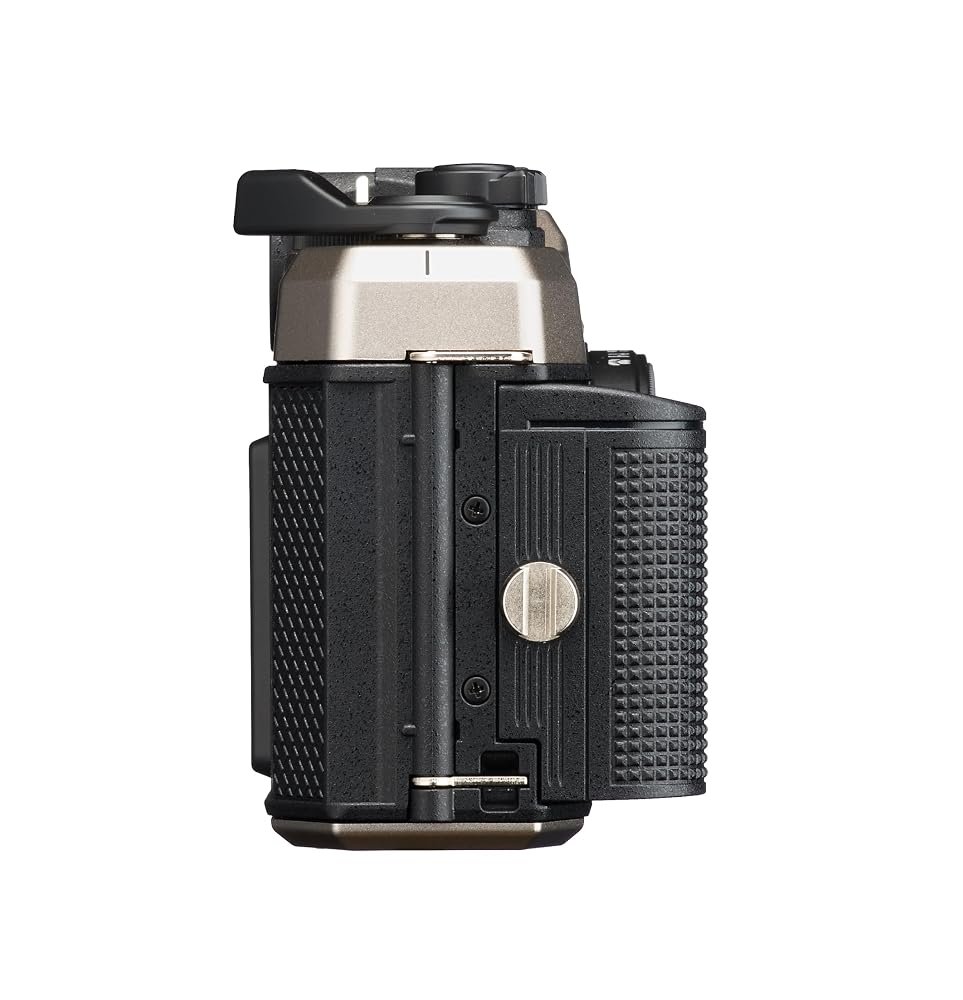


Product photos from the Amazon listing.
The product
Pentax 17
Amazon buyer rating
4.2/5
Solid
The listing does not publish how many buyers rated it.
Price not listed
- Prime eligible
Affiliate link. Price and stock come from the listing and change without notice.
As Amazon Associates, we earn from qualifying purchases. This means we may receive a small commission at no extra cost to you if you click through and make a purchase.
Evaluating whether to introduce analog gear into a workspace routine often comes down to balancing mechanical charm against physical convenience. The Pentax 17 enters this environment as a compact half-frame film camera created through a collaboration between veteran Ricoh Imaging engineers and younger designers. Rather than taking chances on decades-old thrift store gear with brittle internal circuits, this release delivers a modern production run equipped with automatic exposure, a manual film advance lever, and an optical viewfinder. For creators seeking a tactile, screen-free companion to document projects, coffee breaks, and daily life from a home desk, it offers an intentional, grounded workflow.
Adopting this camera means embracing specific mechanical behaviors, beginning with its vertical frame orientation and a six-zone manual focusing ring. Because it records two 17mm by 24mm frames on a single standard 35mm film segment, one 36-exposure cassette delivers up to 72 shots, substantially reducing ongoing development and media expenses. In this pentax 17 film camera review, we evaluate the core pentax 17 specs, inspect the magnesium alloy exterior, test the pentax 17 25mm lens coverage, and determine how effectively this setup fits into creative desktop routines.
What You Get With the Pentax 17
The camera arrives packaged as a self-contained analog imaging tool ready to load with standard physical film media. The listing includes the core body alongside official manufacturer camera accessories, presenting a clean retro appearance without requiring external motor drives or bulky battery grips.
In the box
- Pentax 17 half-frame 35mm film camera finished in dark silver
- Built-in 25mm F3.5 prime lens featuring HD optical coating
- Integrated optical viewfinder configured for native vertical compositions
- Solid magnesium alloy top and bottom protective covers
- Manual film advance lever engineered for ergonomic finger hold
- Manufacturer camera accessories supplied directly in the box
Key Specifications
Specifications
- Film Format
- 35mm film (half-frame 17mm x 24mm exposure area)
- Lens Configuration
- 25mm F3.5 (equivalent to 37mm in standard 35mm format) with HD coating
- Focusing System
- Manual zone-focus system across six distance zones
- Exposure Control
- Automatic exposure modes
- Maximum Shutter Speed
- 1/2000 second
- Supported ISO Range
- ISO 50 to ISO 3200
All 10 specifications
- Supported Film Types
- Color and black-and-white 35mm physical film media
- Chassis Materials
- Solid magnesium alloy top and bottom covers
- Body Color
- Dark silver
- Water Resistance Rating
- Not water resistant
Quoted from the product listing.
Zone Focus System in Daily Practice
The pentax 17 zone focus system replaces electronic autofocus motors with six clearly defined distance zones marked along the lens barrel. Instead of waiting for a sensor to lock focus, the photographer determines the physical span between the lens and the subject, selecting the corresponding graphic mark before tripping the shutter. This zone setup ranges from close-up subject distances out to distant infinity landscapes. Operating in this manner eliminates lens hunting entirely, providing instantaneous shutter response once the distance mark is selected on the ring.
For workspace documentation, this manual distance estimation requires an initial adjustment period. When photographing desk objects, notebooks, or office visitors, estimating distance correctly is essential for optimal sharpness. Vintage digital pocket models like the canon powershot sd1000 use electronic autofocus sensors to handle focusing automatically, whereas the Pentax 17 expects the user to interact directly with the barrel. Fortunately, the 25mm focal length inherently produces generous depth of field, which softens minor calculation errors when working in moderate to bright ambient office lighting.
Learning the six zone settings becomes intuitive after a few rolls of film. Photographers quickly develop muscle memory for standard arm-length desk portraits, tabletop still lifes, and room-scale environmental shots. Because the optical viewfinder does not show a split-image rangefinder patch, looking down at the barrel to verify your zone becomes a deliberate, tactile step. This active mechanical engagement creates a mindful pace that prevents mindless clicking, grounding the photographer firmly in the physical workspace.
Vertical Framing and Half-Frame Economy
The pentax 17 half frame architecture fundamentally reshapes how compositions are arranged. By dividing standard 35mm film into vertical 17mm by 24mm frames, holding the camera in its natural horizontal orientation displays a portrait-oriented frame through the optical viewfinder. This orientation aligns smoothly with contemporary viewing preferences on phones, desktop sidebars, and vertical photo books. Composing upright desk vignettes, architectural details, and standing portraits feels immediate without needing to twist your arms or rotate the camera body ninety degrees.
Media capacity is another major operational strength of the half-frame format. Capturing two images per standard frame allows a typical 36-exposure cassette to produce roughly 72 pictures per roll. For visual creators who use pentax 17 daily routine photography to record desk configurations, sketch iterations, and daily studio lighting changes, this extended frame count dramatically lowers the mental barrier to shooting. Unlike instant cameras like the fujifilm instax mini 41 where media counts are limited to small packs, a single roll in this camera can easily document several weeks of desk activity.
Regarding pentax 17 image quality, the dedicated pentax 17 25mm lens delivers crisp rendering across the compact half-frame negative. Ricoh Imaging applied its established HD coating to the optical elements, mitigating internal reflections and flare when shooting toward desk lamps or bright window light. Because the physical film frame is half the size of a standard 35mm negative, film grain is naturally more noticeable when scans are enlarged. This characteristic gives black-and-white stocks and color emulsions an organic, textured aesthetic that digital filters attempt to mimic.
Everyday Carry Build and Tactile Handling
Selecting the pentax 17 for everyday carry provides a balance between structural strength and everyday lightness. The top and bottom housing plates are crafted from solid magnesium alloy, shielding internal mechanics while keeping the camera lightweight and easy to hold. The dark silver finish looks professional sitting alongside laptops, keyboards, and analog desk planners. Its compact form factor slips easily into an everyday commuter bag, tote, or desk drawer without requiring a dedicated padded camera compartment.
The physical interaction centers on the manual film-winding mechanism. The advance lever is sculpted specifically for an optimal finger hold, giving every frame advance a satisfying, mechanical click. While classic compact digitals like the canon powershot sd750 operate with motorized whirs and electronic button pushes, the manual lever on this camera demands physical participation after each exposure. This mechanical winding action separates shooting sessions into distinct, deliberate moments, fostering focus during brief desk breaks.
Despite its solid magnesium alloy exterior panels, buyers must consider environmental limitations. The listing explicitly confirms that the camera is not water resistant. Bringing it outdoors during rainy commutes, leaving it exposed on damp park benches, or placing it right next to open drink tumblers on an active desk risks internal moisture damage. Treating the camera with standard care ensures that the precision optical components, optical viewfinder, and winding gears remain clean and reliable over extended daily use.
Exposure Control and Lighting Versatility
The internal metering system of the camera relies on automatic exposure control, removing the complexity of balancing aperture and shutter speeds manually. Photographers select their film speed on the dedicated ISO dial, which accommodates a broad sensitivity range from ISO 50 up to ISO 3200. This expansive ISO range lets you load slow, fine-grained color slide film for sunny outdoor patio sessions or high-speed ISO 3200 black-and-white film for moody, low-light office interiors without requiring external metering accessories.
A standout engineering metric in the pentax 17 specs is its maximum shutter speed of 1/2000 second. Compact film cameras often peak at 1/500 second, which can force overexposure when shooting outside in bright daylight with fast film stocks. With a 1/2000 second ceiling, the camera easily manages high-key daylight scenes, maintaining automatic exposure accuracy. This broad shutter range makes shifting between dim indoor studio setups and sunlit outdoor spaces straightforward and consistent.
Pentax 17 Pros and Cons
Reasons to buy
- 72 vertical exposures per standard 36-exposure 35mm roll
- Lightweight, durable magnesium alloy top and bottom covers
- Tactile manual film advance lever for mindful shooting
- Fast maximum shutter speed reaching 1/2000 second
- Coated 25mm F3.5 lens optimizes half-frame image quality
Reasons to avoid
- Zone focus requires manual subject distance estimation
- Body construction is not water resistant
- Automatic exposure mode limits full manual shutter control
Is the Pentax 17 Worth It
Determining whether is pentax 17 worth it comes down to what you want from your daily photographic routine. For remote workers, designers, and visual journalers looking for a dependable analog camera that bypasses screen fatigue, this model is an exceptional desk tool. The combination of double-frame economy, dependable modern factory construction, and a tactile manual advance lever delivers genuine analog satisfaction without the mechanical headaches of unserviced second-hand gear.
On the other hand, photographers who want granular control over manual exposure settings may feel constrained by the automatic exposure programming. If you require full manual aperture and shutter dials, continuous electronic tracking autofocus, or an LCD screen for instant composition review, this camera will not meet your expectations. Furthermore, those who require weather-sealed gear for wet outdoor expeditions will find the lack of water resistance an operational limitation.
For its intended audience—enthusiasts wanting an everyday film companion and beginners looking to explore film with peace of mind—the camera strikes an ideal balance. It preserves the tactile origins of photography while offering modern optical coatings, 72 frames per roll, and a lightweight magnesium alloy chassis that integrates seamlessly into any workspace.
FAQ
What kind of film does the Pentax 17 use?
The Pentax 17 uses standard physical 35mm film cassettes. It supports both color and black-and-white film stocks, with manual ISO settings ranging from ISO 50 to ISO 3200 to match your chosen emulsion.
Why are images shot on the Pentax 17 vertically oriented?
Because the half-frame format splits a standard 35mm frame into two 17mm by 24mm exposures, the frame sits vertically on the film strip. Holding the camera normally presents a portrait orientation through the optical viewfinder.
Is the Pentax 17 safe to use in the rain?
No, the listing confirms that the Pentax 17 is not water resistant. You should shield the camera from rain, high humidity, and accidental liquid spills to protect its internal mechanics and lens elements.
What is the effective field of view of the 25mm lens?
The 25mm F3.5 lens provides an angle of view equivalent to a 37mm lens on a full-frame 35mm camera, offering a natural moderate wide-angle perspective suited for everyday desk scenes, portraits, and street views.
Where these numbers come from
- 192reviews published
- 1,398products with a buyer rating
- 1,374products with listed features
- 84brands covered
Ratings, prices, stock and specifications are read from the Amazon product listing. We do not run lab tests of our own, so a score on this site is the average rating left by buyers, not a verdict from a test bench. Prices change without notice — check the listing before buying.


