Celestron SkyMaster Pro 20×80: Integrating Giant Binoculars into Your Home Setup
If you want to set up a dedicated observation post on your balcony, patio, or home office window, the Celestron SkyMaster Pro 20×80 offers a compelling balance between the visual immersion of binoculars and the light-gathering capability of an introductory telescope. Designed specifically for long-range terrestrial observation and amateur astronomy, this giant optical instrument pairs…
10 min read
How we write these. Every figure here — rating, price, stock and specification — is read from the Amazon product listing, not from hardware we tested ourselves. Ratings are the average left by buyers.
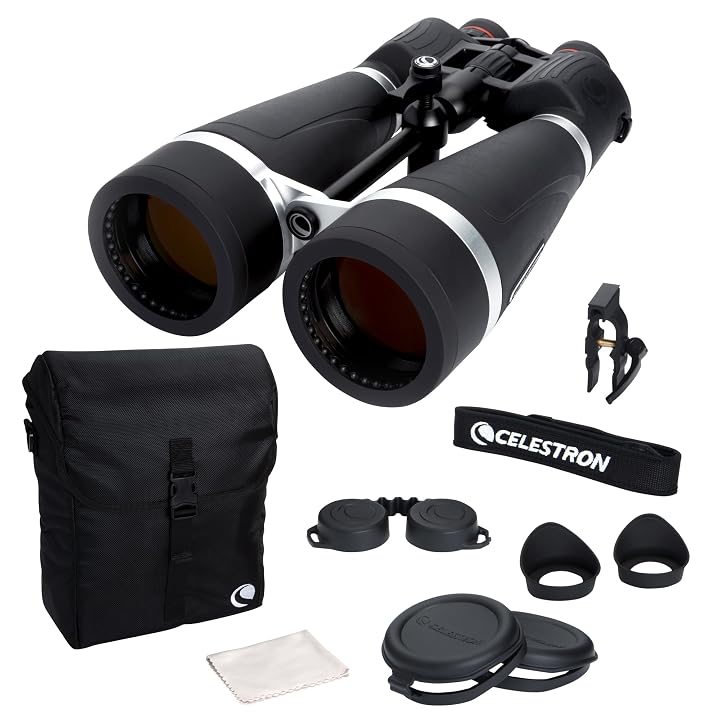


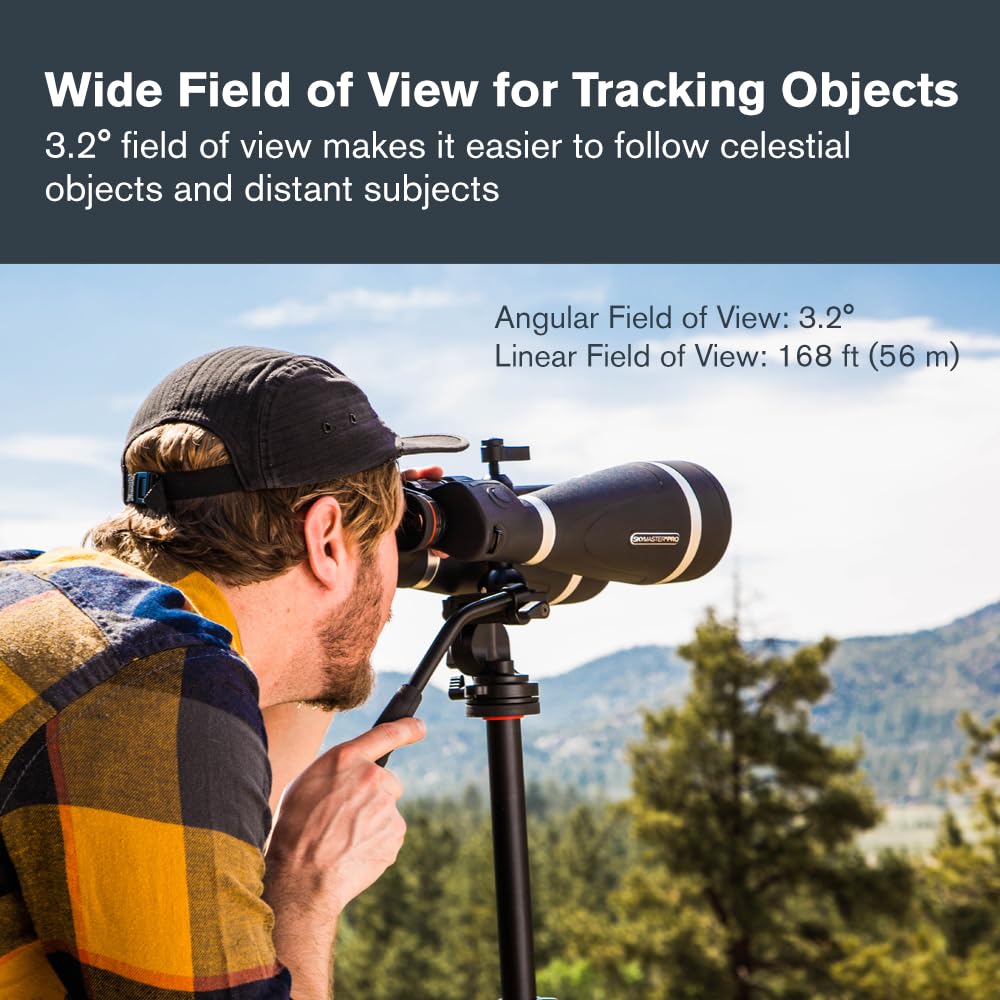

Product photos from the Amazon listing.
The product
Celestron SkyMaster Pro 20x80
Amazon buyer rating
4.4/5
Very good
864 ratings
Price not listed
Affiliate link. Price and stock come from the listing and change without notice.
As Amazon Associates, we earn from qualifying purchases. This means we may receive a small commission at no extra cost to you if you click through and make a purchase.
If you want to set up a dedicated observation post on your balcony, patio, or home office window, the Celestron SkyMaster Pro 20×80 offers a compelling balance between the visual immersion of binoculars and the light-gathering capability of an introductory telescope. Designed specifically for long-range terrestrial observation and amateur astronomy, this giant optical instrument pairs powerful 20x magnification with massive 80-millimeter objective lenses. For observers who prefer a stationary viewing setup without the alignment routines, counterweights, and complex optical tubes of a traditional telescope, these binoculars provide an intuitive, two-eyed visual experience that makes evening sky scanning feel seamless.
Integrating giant binoculars into a domestic viewing space requires an honest understanding of optical power, physical dimensions, and mechanical mounting needs. In this Celestron SkyMaster Pro 20×80 review, we examine how this instrument functions in a permanent home setup, covering its light transmission capabilities, the stability demands of its built-in tripod adapter, environmental resistance against evening dew, and target acquisition with its reflex sight rail. We also review the core Celestron SkyMaster Pro 20×80 specs to help you decide whether this optical heavyweight fits your space, observational routine, and mounting hardware.
What You Get With the Celestron SkyMaster Pro 20×80
The Celestron SkyMaster Pro 20×80 package includes specialized optical components and physical hardware designed to handle demanding outdoor viewing conditions while mounted to a stable base:
In the box
- Dual 80-millimeter objective lenses designed to capture significant ambient light in low-light environments
- High-transmission BaK-4 internal Porro prisms for enhanced image contrast and clarity
- Fully multi-coated optics treated with Celestron proprietary XLT coating technology
- Detachable RSR Reflex Sight Ready rail configured to accept optional red-dot finderscopes
- Integrated central tripod mounting rod designed to balance the binocular over support heads
- Waterproof, nitrogen-purged polycarbonate chassis protected by durable rubber armor
- Central manual focus wheel paired with a right-eye diopter adjustment ring
- Fold-down rubber eyecups providing 15.5 millimeters of eye relief for comfortable viewing
- Access to Celestron limited lifetime warranty coverage and US-based customer technical support
Key Specifications
Specifications
- Magnification
- 20x
- Objective Lens Diameter
- 80 mm (8 cm)
- Prism Glass Type
- BaK-4 Porro Prism
- Optical Coatings
- Fully Multi-Coated with Celestron XLT Coatings
- Angular Field of View
- 3.2 degrees
- Exit Pupil Diameter
- 4.0 mm
All 10 specifications
- Relative Brightness
- 4
- Eye Relief
- 15.5 mm
- Waterproof Rating
- Waterproof and Nitrogen Purged
- Mount Interface
- Integrated Central Tripod Adapter Rod
Quoted from the product listing.
Tripod Mounting and Station Stability Requirements
Attempting to use the Celestron SkyMaster Pro 20×80 as a handheld binocular will quickly lead to disappointment. With 20x magnification, every micro-tremor in your hands, arms, and chest translates into violent image jitter that destroys fine detail. This magnification level magnifies natural muscle vibrations twenty times over, making steady handheld viewing functionally impossible. To unlock the visual capability of this instrument, pairing it with a rigid, high-capacity tripod is mandatory. The binocular incorporates a rigid central metal rod that runs between the barrels, hosting a sliding tripod adapter that clamps directly onto standard tripod heads.
When incorporating these giant binoculars into a domestic balcony or window viewing post, platform rigidity becomes your primary focus. Balconies with wood decking or thin metal railings can transmit footsteps directly through tripod legs, producing visible wobble at high magnification. A heavy-duty photo or video tripod with a fluid pan-and-tilt head creates the smoothest tracking experience when following distant shipping traffic or slow-moving celestial bodies. Unlike an equatorial telescope setup such as the Celestron AstroMaster 130EQ, which requires polar alignment and counterweight balancing, the Celestron SkyMaster Pro 20×80 tripod mount configuration allows you to aim across the horizon or up toward zenith using direct, intuitive manual motions.
Achieving proper balance on your tripod head is straightforward thanks to the central support rail. The integrated mounting clamp can slide along the central support bar before locking down, allowing you to balance the binocular depending on your viewing angle. If you are pointing steeply upward to observe zenith constellations, shifting the clamp forward or backward relieves strain on your tripod head pan lock. Securing this balance minimizes the risk of sudden slippage, ensuring your home viewing station remains stable and ready whenever interesting targets present themselves.
Optical Performance for Low Light and Astronomy
The primary attraction of the Celestron SkyMaster Pro 20×80 for astronomy is its massive light-gathering power. The twin 80-millimeter objective lenses capture a vast amount of ambient photons compared to compact optics, making them ideal for twilight viewing and dark night skies. Optical physics dictates light throughput based on aperture and exit pupil. With an 80-millimeter aperture and 20x magnification, this binocular yields a 4-millimeter exit pupil and a relative brightness rating of 4. While this exit pupil is narrower than the wide beams produced by standard marine binoculars, it provides high image scale and dark background contrast, which helps faint celestial objects stand out against ambient suburban skyglow.
Celestron equips this Pro model with premium BaK-4 barium crown glass prisms and proprietary XLT optical coatings applied across every air-to-glass boundary. These Celestron 20×80 XLT coatings maximize light transmission while sharply curtailing internal lens reflections and stray flares. When pointing the binocular near bright streetlights or observing the brilliant edge of a crescent moon, the anti-reflective treatments preserve sharp contrast across the entire 3.2-degree field of view. Handheld astronomy models like the Celestron Cometron 7×50 binoculars offer wider overall vistas, but they cannot compete with the sheer resolving detail, reach, and light-grasp of an 80-millimeter objective system.
Through the eyepieces, astronomical targets take on distinct depth thanks to binocular vision. Viewing the moon reveals intricate crater walls, rilles, and mountain peaks along the lunar terminator without the blinding single-eye glare common in telescopes. Deep-sky targets like the Orion Nebula (M42), the Andromeda Galaxy (M31), and the Pleiades open star cluster (M45) resolve with three-dimensional character against a dark backdrop. For planetary observation, the 20x magnification clearly reveals Jupiter as a distinct disk flanked by its four Galilean moons, while Saturn appears as an elongated elliptical shape, hinting at its magnificent ring system.
Target Acquisition with the Reflex Sight Rail
One inherent challenge with high-magnification observation is finding specific targets quickly. The 3.2-degree field of view on the Celestron SkyMaster Pro 20×80 long-range viewing setup represents a relatively narrow slice of the sky or landscape. At 20x power, finding a single faint star cluster, a distant ridge marker, or a ship far offshore can require frustrating trial-and-error scanning if you are peering solely through the eyepieces. A minor miscalculation in your aim can leave you sweeping empty sky for minutes at a time.
Celestron addresses this aiming issue by integrating a detachable RSR Reflex Sight Ready rail atop the central support bar. The Skymaster Pro 20×80 RSR rail accepts standard reflex sights and red-dot finders commonly used on firearms and astronomical gear. By attaching an optional non-magnified reflex sight to this rail and aligning it once with the optical path, you can visually aim the binocular with both eyes wide open. You simply place the illuminated red dot on your intended subject, look down into the rubber eyecups, and find the target centered in the field of view.
For home balcony stations, this rapid sighting capability transforms usability during brief viewing windows. If you spot an unusual aircraft, a passing satellite, or wildlife emerging along a distant hillside at dusk, you cannot afford minutes of frantic searching. While computerized telescopes like the Celestron StarSense Explorer LT 114AZ rely on smartphone platesolving to guide your hands, the mechanical simplicity of a red-dot sight mounted directly to the SkyMaster Pro rail delivers instantaneous target location without relying on software apps, phone batteries, or digital calibration.
Chassis Construction and Environmental Protection
Setting up an optical station next to an open balcony door or out on an exposed porch exposes equipment to harsh ambient conditions. The Celestron SkyMaster Pro 20×80 features a durable housing constructed from lightweight polycarbonate material encased in protective rubber armor. This rubberized shell provides a non-slip grip during setup and teardown while serving as a shock absorber against minor bumps against window frames, railings, or tripod legs. The structural rigidity of this chassis also prevents the optical barrels from flexing, which is critical for maintaining optical collimation across years of routine use.
Environmental sealing is another standout feature of the Pro series. The optical tubes are fully waterproof and nitrogen purged to displace moist internal air. When moving heavy binoculars from a warm, climate-controlled home office into the cold evening air of a patio, unsealed optics frequently suffer from internal fogging, which renders them useless until the interior dries out. The nitrogen-purged interior of the SkyMaster Pro prevents internal condensation entirely, allowing you to observe uninterrupted regardless of sudden temperature differentials or rising evening humidity.
Focus adjustments are handled through a large, centrally located manual focus wheel flanked by an independent right-eyepiece diopter adjustment ring. The central focus mechanism provides enough mechanical resistance to prevent unintentional drift, maintaining precise focus on distant objects even during extended stationary viewing. Observers wearing eyeglasses can fold down the rubber eyecups to take full advantage of the 15.5-millimeter eye relief, ensuring you can see the complete field of view without removing corrective lenses.
Celestron SkyMaster Pro 20×80 Pros and Cons
Reasons to buy
- Massive 80mm lenses maximize light gathering
- Fully multi-coated optics with proprietary XLT coatings
- Detachable RSR rail accepts reflex sights
- Waterproof and nitrogen purged polycarbonate housing
- High quality BaK-4 internal Porro prisms
Reasons to avoid
- Requires a heavy duty tripod for stability
- Too heavy for comfortable handheld observation
- Narrow 3.2 degree field requires precise aiming
Check Celestron SkyMaster Pro 20×80 on Amazon
Is the Celestron SkyMaster Pro 20×80 Worth It
Whether the Celestron SkyMaster Pro 20×80 is worth it depends entirely on your viewing goals and whether you are willing to commit to a permanent tripod setup. If you are an amateur astronomer or long-range nature observer seeking an immersive, high-magnification instrument that avoids the mechanical complexities of telescope tubes, this binocular is an exceptional tool. The two-eyed viewing perspective reduces visual fatigue during long evening sessions, while the large 80-millimeter objective lenses draw in sufficient light to reveal faint celestial wonders and distant landscape details with crisp contrast.
When analyzing the Celestron SkyMaster Pro vs standard SkyMaster models, the Pro edition delivers distinct engineering advantages that justify the upgrade for serious stations. While standard entry-level giant binoculars often utilize basic multi-coatings and water-resistant shells, the Pro series features proprietary XLT optical coatings, a nitrogen-purged waterproof polycarbonate chassis, and the integrated RSR reflex sight rail. These structural improvements provide superior moisture protection, sharper color contrast, and significantly faster target acquisition in practical daily use.
However, this instrument is not suited for users seeking casual, grab-and-go portability. If you want a lightweight pair of binoculars for hiking, stadium events, or quick handheld scanning from an armchair, the substantial weight and required tripod footprint will prove cumbersome. For dedicated home observation posts, permanent balcony setups, and stationary stargazing routines, the Celestron SkyMaster Pro 20×80 provides a rewarding optical window into distant landscapes and deep-sky treasures.
FAQ
Can you use the Celestron SkyMaster Pro 20×80 without a tripod?
Handheld observation is not practical with the Celestron SkyMaster Pro 20×80. At 20x magnification, natural hand tremors cause severe image shaking that blurs fine visual details and induces eye strain. The physical dimensions and weight of the 80-millimeter barrels will quickly fatigue your arms. To achieve sharp, steady views, you must mount the binocular to a sturdy photo or video tripod using the built-in central mounting rod.
What celestial objects can you see with the Celestron SkyMaster Pro 20×80?
The Celestron SkyMaster Pro 20×80 for astronomy provides exceptional views of bright solar system and deep-sky targets. You can clearly inspect lunar craters, mountain ridges, and maria along the Moon’s shadow line. Jupiter appears as an illuminated disk surrounded by its four Galilean moons, and Saturn displays an extended oval profile revealing its ring structure. Faint deep-sky targets like the Orion Nebula, Andromeda Galaxy, Hercules Cluster, and Pleiades star cluster reveal striking structure and depth under dark skies.
How does the SkyMaster Pro differ from standard SkyMaster binoculars?
The SkyMaster Pro series features several major mechanical and optical upgrades compared to standard baseline SkyMaster binoculars. The Pro version utilizes Celestron proprietary fully multi-coated XLT optical coatings on all glass surfaces, a fully waterproof and nitrogen-purged polycarbonate chassis, and the detachable RSR Reflex Sight Ready rail. These features provide better light transmission, superior weather protection against internal lens fogging, and faster target acquisition.
Does the Celestron SkyMaster Pro 20×80 include a tripod?
The product listing does not include a tripod in the box. The binocular comes equipped with an integrated central tripod mounting rod and an adjustable adapter clamp that attaches to standard 1/4-inch-20 tripod mounting plates. You will need to supply your own heavy-duty tripod and smooth pan-and-tilt head to support the instrument.
Can people who wear eyeglasses use the SkyMaster Pro 20×80 comfortably?
Yes, the Celestron SkyMaster Pro 20×80 provides 15.5 millimeters of eye relief, which allows most eyeglass wearers to observe comfortably. The eyepieces feature flexible rubber eyecups that can be folded down, enabling you to bring your corrective lenses closer to the ocular glass to experience the complete 3.2-degree field of view without peripheral vignetting.
What buyers wrote
Quoted word for word from Amazon reviews. We did not edit them.
YOU WILL NEED A STUDY TRIPOD for these binos. There's an east view from my deck that allows me to view the Moon rise, Venus, Orion, Saturn and a host of other players. I don't know if it's the Central Texas air that makes that Moon…
These are very nice quality binoculars and do the job exceptionally well. For good example, I was able to find Jupiter and 4 of its moons. They were crisp just about to the point where I could make out the separate bands on Jupiter, even despite…
Where these numbers come from
- 192reviews published
- 1,398products with a buyer rating
- 1,374products with listed features
- 84brands covered
Ratings, prices, stock and specifications are read from the Amazon product listing. We do not run lab tests of our own, so a score on this site is the average rating left by buyers, not a verdict from a test bench. Prices change without notice — check the listing before buying.


